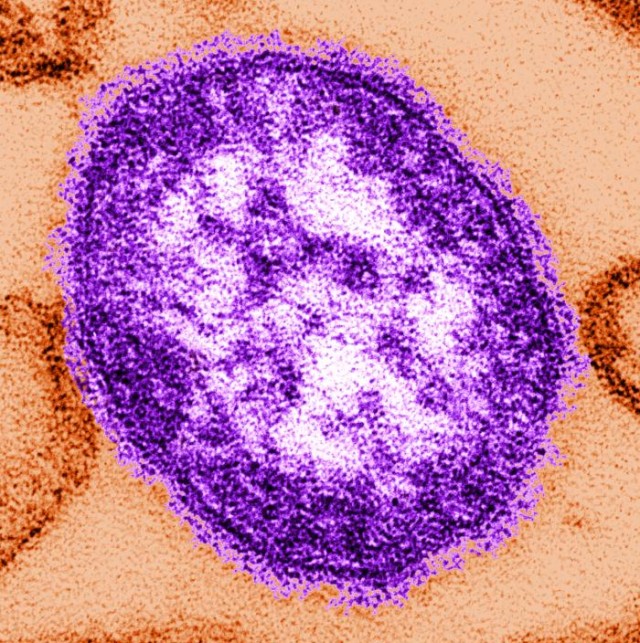
Ohio measles outbreak nearly triples, expected to last “several months”

measles outbreak in the Columbus, Ohio, area has nearly tripled in the last two weeks as officials say they’re struggling to identify the geographic spread of the outbreak and expect it to drag on for months.

Confirmed cases have risen from 18 in mid-November to the confirmed case count of 50, as of Friday morning. Twenty of the cases have required hospitalization. No deaths have been reported.

All of the sickened children are entirely unvaccinated. Nine of the cases are in babies under the age of 1 year, who are typically not yet eligible for vaccination. Twenty-six cases are in infants ages 1 to 2 years—who are eligible for their first dose. Ten cases are in toddlers ages 3 to 5—some of whom would have been eligible for their second dose—and there are five cases in children between the ages of 6 and 17.

In a press conference earlier this week, health officials said that at least 25 percent of the area’s 2-year-olds have not been vaccinated with the safe and effective MMR vaccine, which protects against measles, mumps, and rubella. Based on census data from Franklin county, which encompasses Columbus, that means than tens of thousands of area children are vulnerable to the highly infectious virus that can easily turn severe and even life-threatening in young children.

Expected to grow

Measles is an airborne virus, spread via coughing, talking, or even being in the same vicinity as an infected person. In indoor spaces, the virus can linger in the air for up to two hours after an infected person has passed through. The Centers for Disease Control and Prevention estimates that up to 90 percent of unvaccinated people exposed to the virus will become infected.

“I do expect our numbers to continue to grow,” Mysheika Roberts, public health commissioner for Columbus, said in a press conference this week. “In talking to the CDC and our colleagues across the country who’ve experienced measles outbreaks, this can last several months.”

Local health officials are now working closely with the CDC and the Nationwide Children’s Hospital to address the cases and try to curb the outbreak. But, Roberts acknowledged in the press conference that they’re still having trouble getting a handle on the outbreak’s scope.

For instance, in some measles outbreak responses, health officials can make the decision to preemptively vaccinate infants ages 6 to 11 months old if they’re considered at high risk of infection—infants are typically eligible for their first MMR dose at 12 months, with a second dose given between the ages of 4 and 6. But, that early vaccination strategy is typically deployed when epidemiologists can pinpoint the communities at risk, which is not the case in Columbus.

“We have been in discussion with the CDC about that,” Roberts said. “Communities that have done that in the past have been able to really define the geographic location of where the cases are. We are not certain that we can really restrict the geographic area. So, we’re looking into that closely. We’re working with our colleagues at CDC [and] really trying to map out where these cases are to see if there is a segment of our community that we could offer that as an option to parents.”

Roberts noted that, so far, the outbreak spans three public health jurisdictions: Columbus Public Health, Franklin County Public Health, and the Ross County Health District. Ross County is about 47 miles south of Franklin county, with another county, Pickaway, in between the two.

“Get them vaccinated now”

In addition to the three geographic areas, Roberts also noted three specific locations where confirmed cases were known to have been contagious, which included a grocery store, a church, and a mall. She listed out the locations, dates, and times of potential exposures down to the hours, accounting for the possibility of the virus lingering for up to two hours.

“We have no way of informing individuals in those areas without going to the media,” Robert said.

The 50 cases so far are all counted from November 7 onward and are considered to be from local community spread of the virus. There were four other travel-related cases in the area earlier in the year, between June and October. It’s unclear how the current outbreak began, but officials suspect it is connected to one of the earlier travel-related cases.

Ohio’s current 2022 total of 54 measles cases accounts for the bulk of the country’s total cases. The CDC listed a total of 55 cases nationwide as of November 24. But case numbers are expected to grow in Ohio. And with the anti-vaccine sentiments that have taken hold and missed vaccinations during the pandemic, health experts in the US and worldwide are bracing for a fierce resurgence of the highly contagious virus.

Vaccination against measles is highly protective and the best weapon to fight the potentially deadly infection. Roberts pleaded with local parents of unvaccinated children to get their children vaccinated as soon as possible with the virus swirling around their community.

“I strongly encourage those parents to get those kids vaccinated—now. Don’t wait. Don’t wait until after the holiday. Get them vaccinated now,” Roberts said.

She added that local health officials had opened vaccination clinics in recent weeks but had not seen an uptick in children getting MMR vaccines.
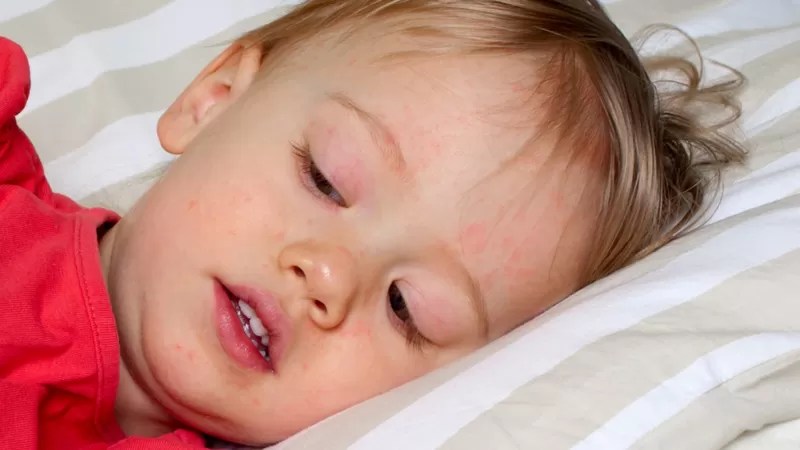
Six children die with Strep A bacterial infection

A girl from Wales has also died. No deaths have been confirmed in Scotland or Northern Ireland.

Strep A infections are normally mild but people can become seriously ill.

Parents concerned about their child’s symptoms should seek medical advice, the UKHSA has advised.

While still uncommon, there has been an increase in invasive Group A Strep cases this year, particularly in children under 10.

A child from Ealing, west London, and another from Ashford in Surrey, are among those who have died after contracting the infection.

A four-year-old boy, named as Muhammad Ibrahim Ali, from High Wycombe, Buckinghamshire, also died last month.

Primary school pupil Hanna Roap, from Penarth, Vale of Glamorgan, has also died from the infection.

Strep A: Why it can be dangerous and what to know
Infections caused by Group A Strep bacteria are usually mild with symptoms like a sore throat or skin infections.

The bug can also cause scarlet fever which can, in the majority of cases, be treated successfully with antibiotics and people make a full recovery.

However, in a very small number of cases, Group A Strep infection can get deeper into the body – for example, into the lungs and bloodstream – causing an illness known as invasive Group A Streptococcus (iGAS), which is much harder to treat.

There are a range of symptoms which may be a sign of an invasive infection, including high fever, poor appetite, dehydration, altered behaviour and feeling very sleepy, according to Dr Colin Brown, deputy director of the UKHSA.

He has advised parents to be on the lookout for these signs and “see a doctor as quickly as possible so that their child can be treated and we can stop the infection becoming serious”.

“Make sure you talk to a health professional if your child is showing signs of deteriorating after a bout of scarlet fever, a sore throat, or a respiratory infection,” he added.

During the last high season for invasive Group A Strep infection, in 2017-18, there were four deaths in children under 10, compared to the five this year during the same time period.

The latest increase is most likely related to high amounts of the bug circulating and increased social mixing, said the UKHSA.

Dr Elizabeth Whittaker, honorary clinical senior lecturer, at Imperial College London, said: “During the first two years of the pandemic, we saw very little Group A Strep and it has started to circulate again in 2022 as restrictions have been lifted.

“Usually we see a high number of cases in late spring or early summer, often after chicken pox infections. High numbers at this time of year are unusual and probably occurring as normal seasonality has not yet returned.

“Tragically, when there are high numbers of infections, the severe cases will also occur. We are seeing more pneumonia than usual, most likely as group A strep infections are coinciding with the peak in winter respiratory viruses which are typical for this time of year.”

As part of its investigations, the UKHSA is also examining reports of an increase in chest infections caused by Group A Strep resulting in severe illness over the past few weeks.

Signs of scarlet fever
The total number of scarlet fever cases also continues to remain higher than would typically be seen at this time of year, according to the latest data.

There were 851 cases reported in the week of 14-20 November, compared to an average of 186 for the preceding years.

Dr Nathalie MacDermott, lecturer at King’s College London, said: “Prompt treatment of scarlet fever and Strep throat reduce the chances of a child developing invasive group A Strep and reduce the chances of the infection spreading to other children at school or household members.”

The symptoms of scarlet fever include a sore throat, a swollen, red tongue, headache, and fever, along with a fine body rash with a sandpapery feel.

On paler skin, this may look pinkish or red but, on darker skin, it may not have the same colour change.

While most children do recover quickly from scarlet fever, if they deteriorate further, parents are advised to trust their instincts and seek urgent medical advice.

UKHSA advises people to call 999 or go to A&E if:

your child is having difficulty breathing – you may notice grunting noises or their tummy sucking under their ribs
there are pauses when your child breathes
your child’s skin, tongue or lips are blue
your child is floppy and will not wake up or stay awake
There have been 2.3 cases of the invasive Strep A per 100,000 children aged one to four in England this year, compared with an average of 0.5 in pre-pandemic seasons of 2017-19, the agency said.

There have also been 1.1 cases per 100,000 children aged five to nine, compared with a pre-pandemic average over the same period of 0.3.

line
What is Strep A?
Streptococcus pyogenes

Group A streptococcal (GAS) infection is caused by strains of the streptococcus pyogenes bacterium
The bacteria can live on hands or the throat for long enough to allow easy spread between people through sneezing, kissing and skin contact
Most infections cause mild illnesses such as “strep throat” or skin infections
It can also cause scarlet fever and in the majority of cases this clears up with antibiotics
On rare occasions the bacteria can get deeper into the body – including infecting the lungs and bloodstream. It is known as invasive GAS (iGAS) and needs urgent treatment as this can be serious and life-threatening

What is Strep A and what are the symptoms to look out for?

Since Covid restrictions eased, there are more opportunities for infections like this to spread. Cases have been increasing in recent weeks.

While most people do not get extremely sick, the highly contagious bacteria that causes the infection can cause serious illness and complications.

Fourth child dies with Strep A bacterial disease
What is Strep A?
It’s a bacteria sometimes found in the throat or on the skin.

Many people carry it harmlessly without even knowing, but they can spread it to others who might become ill.

What are the symptoms?

Most often, symptoms are mild – a sore throat or a skin infection that can be easily treated with antibiotics.

But Strep A can cause a range of things – and some of them are more serious.

One is scarlet fever, which mostly affects young children and, again, needs antibiotics.

What is scarlet fever?

It is a notifiable disease, meaning health professionals must inform local health protection teams of suspected cases. This is so they can be treated quickly and possible outbreaks brought under control.

It causes a rash and flu-like symptoms, including a temperature, sore throat and swollen neck glands.

On darker skin the rash can be more difficult to detect visually but will have a sandpapery feel.

Someone who has scarlet fever may have what doctors call a strawberry tongue – because its appearance looks a bit like a strawberry.

Is Strep A dangerous?
Very rarely, Strep A can also cause something called invasive group A streptococcal infection or iGAS.

This can be deadly.

Invasive disease happens when the bacteria get past your body’s immune defences. This can happen when you are already ill or are on treatments, such as some cancer therapies, that affect your immune system.

Warning signs of invasive disease include:

fever (a high temperature above 38C)
severe muscle aches
Urgent, early medical help is essential.

The UK Health Security Agency advises: “Anyone with high fever, severe muscle aches, pain in one area of the body and unexplained vomiting or diarrhoea should call NHS 111 and seek medical help immediately.”

What to do if your child is unwell
If you think your child may have any symptoms from Strep A then you should speak with your doctor.

Tell them if you have been in contact with someone who has had Strep A recently.

Design a site like this with WordPress.com
Get started